EthioTrees Agroforestry


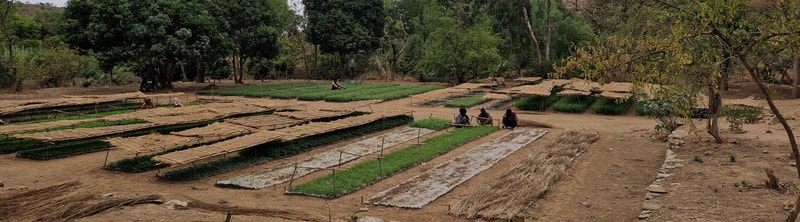

Communities at the heart of restoring nature
Across northern Ethiopia, decades of deforestation, fuel collection and land degradation have damaged woodland ecosystems. The effects go beyond the loss of trees, affecting soils, water availability, biodiversity and local livelihoods.
EthioTrees puts communities at the heart of restoring these landscapes. Through woodland restoration, agroforestry and long-term benefit sharing, local people help rebuild healthy ecosystems while creating a more resilient future for the communities that depend on them.

How carbon finance supports community-led restoration
Restoring degraded land takes time, investment and the long-term commitment of local communities. Carbon finance helps make that possible by supporting woodland restoration, agroforestry, community training, nurseries, monitoring, and the planning and land management needed for landscapes to recover over time.
More than 60% of carbon-credit revenue is returned directly to participating communities. This gives local people a financial stake in successful restoration and helps finance community priorities, livelihoods and long-term economic opportunities alongside climate and nature benefits.
EthioTrees is designed around community ownership, with local people sharing directly in the value created through restoration. For buyers seeking deep, long-term community impact alongside nature-based removals, few projects create a stronger connection between climate finance and generational opportunity.

More than trees. Lasting community impact.
Restoration creates the greatest impact when communities share in its success. EthioTrees connects landscape recovery with income, water, education and stronger local livelihoods.

30,031 hectares under active restoration
Restoring degraded woodlands and agroforestry systems.
145 community groups
Connecting community-led restoration with 58,647 participating households.
15+ water reservoirs built
Supporting groundwater recharge and dry-season irrigation.
30 schools supported
Benefiting more than 3,092 children in participating communities.


EthioTrees has grown into a proven model for community-led restoration at scale.

Contributing to the UN Sustainable Development Goals
EthioTrees contributes to six SDGs by connecting community-led restoration with climate action, water security, biodiversity recovery and more diverse rural livelihoods.


Closer to the communities restoring the landscape
EthioTrees is delivered through a community-led model that connects local stewardship with experienced project development, recognized certification, and ongoing quality oversight. EthioTrees Ethiopia Association implements the project with participating community groups, while Climate Lab provides project design and development expertise.
Climate Impact Partners combines close partner engagement with technical due diligence and ongoing quality assessment. Our review considers carbon integrity, community benefit sharing, biodiversity outcomes, governance, and the project’s resilience within a challenging operating context. This gives buyers a balanced view of both the project’s impact and its risks.
For buyers, this provides confidence that community benefits are embedded in the project model, project risks are actively assessed, and climate and nature outcomes are supported by recognized certification and ongoing oversight.
Project details
Implementer: EthioTrees Ethiopia Association
Project design and development: Climate Lab
Commercial partner and quality oversight: Climate Impact Partners
Registry and standard: Plan Vivo
Methodology: Plan Vivo PM001
Community model: Participating community groups protect restoration areas, support natural regeneration, plant native trees, and help manage the restored landscape
Benefit sharing: More than 60% of carbon-credit revenue returned directly to participating communities
CIP Quality Assurance: Pass
Carbon integrity: 4/5
Project ESG: 4/5
Independent ratings: Sylvera A and BeZero BBB, subject to confirmation that both remain current and are approved for website use
Validation and verification body: MUTU International


