Aqua Clara Water Filters


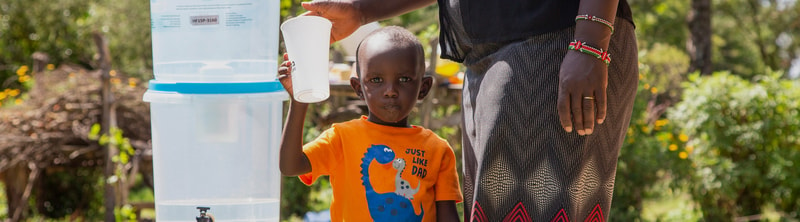

Changing the way families make water safe to drink.
For many families in Kenya, making water safer to drink has traditionally meant finding or buying firewood, lighting a stove and waiting for water to boil. Repeated day after day, that process takes time, costs money and creates smoke within or around the home.
Aqua Clara offers a simpler alternative: zero-energy filters that treat water at the point of use without electricity or continued fuel purchases. Household, institutional and community filters are paired with user training, maintenance and hygiene education, helping make safe-water practices part of everyday life rather than a one-time technology handover.
The impact extends beyond treated water. Families can reduce fuel use and smoke associated with boiling, while schools, health facilities and community organizations gain access to larger filtration systems. Local distribution, customer support and maintenance create jobs and practical skills, connecting an everyday health need with wider social and climate benefits.

Why carbon finance is critical.
Carbon finance helps keep water filters affordable for households, schools and community organizations that might otherwise be unable to meet the full upfront cost. But it supports far more than the hardware itself.
Revenue helps fund distribution, WASH education, staff salaries, filter maintenance, monitoring, independent verification, and research and development to improve filter quality and reduce costs. The program’s scale and continuity depend on these activities because distributing a filter alone does not guarantee long-term use or verified impact.
Climate Impact Partners is the current project representative, supporting project governance, monitoring and verification, and the connection between measured emissions reductions and carbon buyers. For organizations seeking visible health, education and quality-of-life outcomes alongside climate action, Aqua Clara provides a practical route to support both.


Safe water. Less fuel. Healthier daily lives.
Aqua Clara connects safe-water access with lower fuel use, practical training and independently verified climate and social outcomes.

16,454 household filters distributed
Providing point-of-use filtration across participating Kenyan communities.
1,063 institutional filters
Supporting treated water in schools, health facilities and other institutions.
46 community filters
Providing larger-scale treatment for shared community use.
Reduced waterborne illness
Verified monitoring records high levels of reported improvement across household, institutional and community users.
48 project jobs
Creating employment and practical experience in distribution, customer support, monitoring and maintenance.
Despite boiling her water, Naomi Moraa Magena continued to become ill. Through a community-development-group loan, Naomi purchased an Aqua Clara filter and reported being free from waterborne disease since using it. Naomi also reported saving close to 300 Kenyan shillings each month on fuel previously used to boil water.

Contributing to the UN Sustainable Development Goals


Closer to the project.
More confidence in the impact.
Aqua Clara is a long-running safe-water and carbon program, not a one-off filter-distribution campaign. The current GS11169 program continues the earlier GS1078 Aqua Clara Water Filtration Program in Kenya, helping maintain access in participating communities while extending the program into additional counties. Climate Impact Partners is the current project representative, while Aqua Clara develops and delivers the filtration program within Kenya.
Confidence in the impact depends on continued use. Filters have unique identification codes connected to end-user records, and monitoring assesses distribution, functionality, maintenance, usage, water treatment and reported health and indoor-air outcomes. Independent verification includes document review, household and institutional sampling, interviews and site visits.
The filtration technology is supported by maintenance and membrane-replacement plans, while institutional meters help record treated water volumes. The program’s internal quality controls, Kenya Bureau of Standards certification and independent Gold Standard verification create several layers of evidence behind its climate and social claims.

Project details
Project developer and implementer: Aqua Clara International and Aqua Clara Kenya
Project representative: Climate Impact Partners
Registry and standard: Gold Standard for the Global Goals
Current project ID: GS11169
Historic project ID: GS1078, crediting period ended December 27, 2021
Current methodology: Methodology for Emission Reductions from Safe Drinking Water Supply, version 1.0
Current crediting period: February 9, 2022 to February 8, 2027
Current verification body: 4K Earth Science Private Limited
CIP Quality Assurance: Pass
Independent verification: Monitoring period four completed September 15, 2026
CCP status: Validate current status before publication


