Aranya Reforestation


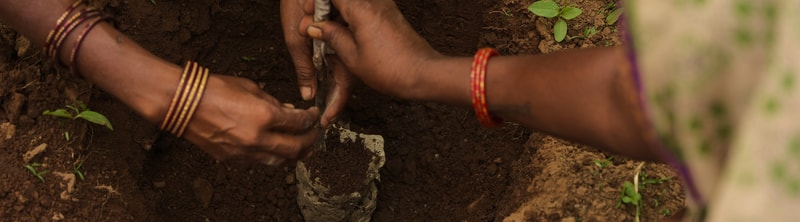

Bringing trees and opportunity back to the land.
For restoration to last, it must create long-term value for the people who care for the land. Project Aranya helps farmers in Madhya Pradesh build productive agroforestry systems that generate value through fruit and silk product alongside carbon removals. This in turn transforms degraded land into an asset that supports future generations.
Through long-term carbon finance, farmers receive planting materials and support. Productive trees can generate income while restoring landscapes, improving water resilience and storing carbon over the long term.

Building future carbon removal supply.
Large-scale nature-based removals typically take years to develop, plant, monitor and verify. Aranya has a head start, with early development and planting work completed and the main program moving into scaled delivery.
Funding native-tree agroforestry, farmer support and the systems needed to deliver durable removals over time helps farmers make a long-term commitment to productive agroforestry on their own land.
The project follows the VM0047 methodology and CCP aligned credits are expected to be available from 2030-2050. It also aims to be Climate, Community & Biodiversity (CCB) certified and forward offtake agreements are available today, making it attractive to organizations looking to secure high-quality removals as they progress towards their net zero targets.


Growing trees. Building lasting value.
Aranya is designed so that climate impact and farmer value reinforce one another. Productive trees, water infrastructure and practical support help create the conditions for durable carbon removal and more resilient rural livelihoods.

10 million native trees planned
Restoring degraded land through productive agroforestry.
3 million tonnes of CO₂ expected to be removed
Creating long-term nature-based carbon removals.
More resilient livelihoods
Supporting income through fruit production, Tasar silk and diversified agroforestry systems.
Water and farming support
Using water harvesting, drip irrigation and climate-smart practices to support tree survival and more resilient production.
Contributing to the UN Sustainable Development Goals
Aranya brings together carbon removal, land restoration and new livelihood opportunities for participating farmers, contributing to several UN Sustainable Development Goals.


Designed, tested and developed by Climate Impact Partners
Aranya was developed by Climate Impact Partners through an evidence-led development process that tested planting models, land eligibility, seedling supply, farmer preferences and delivery at real scale. Approximately 1.2 million trees were planted during the early phase, generating practical lessons that shaped the current program.
Those lessons informed a lower-risk private-land agroforestry model built around productive native trees, multiple specialist implementation partners and closer operational oversight. The approach is designed to strengthen tree survival, long-term farmer participation and permanence by making living trees economically valuable to the people who manage them.
Climate Impact Partners continues to oversee the project through an expanded in-country team and a standardized operational and due-diligence framework. This combines technical development with practical delivery oversight, helping identify issues early and support reliable long-term carbon removal.

Designed, tested and developed by Climate Impact Partners
Project developer: Climate Impact Partners
Registry: Verra VCS
Project ID: VCS 4811
Methodology: VM0047 Afforestation, Reforestation and Revegetation
Standard: VCS Standard
Project model: Private-land fruit and Tasar silk agroforestry
Implementation: Multiple specialist implementation partners under direct CIP oversight
Operational oversight: Standardized CIP due diligence across approximately 150 checkpoints and six workstreams
Independent rating: BeZero A, ex-ante and provisional
Validate: Current validation and verification body

Quality, integrity and labels
Registry: Verra VCS
Methodology: VM0047 Afforestation, Reforestation and Revegetation
Methodology integrity: CCP-approved methodology
Climate, Community and Biodiversity Standard: In progress
ABACUS label: Potential future eligibility, subject to confirmation
Independent rating: BeZero A, ex-ante and provisional
Current validation and verification body: Validate


