

Unlocking the potential of one of our most valuable coastal ecosystems
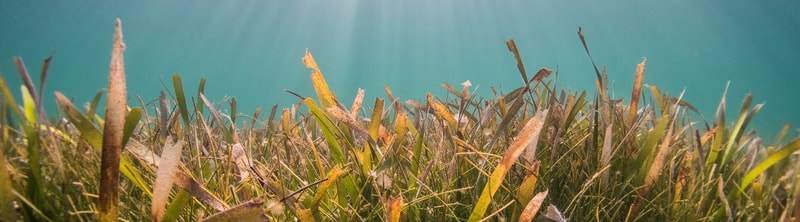
Seagrass meadows are powerful natural carbon stores, important habitats for marine life and a first line of defense for our coastlines. Yet the UK has lost around 90% of its seagrass over the last century.
Accelerate Seagrass was developed by Climate Impact Partners in collaboration with Project Seagrass and the UK’s National Oceanography Centre, with funding and support from Deloitte. The program combines restoration with critical research to understand how seagrass stores carbon, improve restoration techniques and help unlock the long-term finance needed to restore these ecosystems at scale.
This is what Accelerate looks like: supporting promising climate solutions before established carbon-credit revenues exist, helping build the science, systems and evidence needed for them to grow.
Project at a glance

Around 90%
of UK seagrass lost over the last century
UK-wide research
helping map seagrass ecosystems and identify opportunities for restoration
A pathway to scale
supporting the development of a UK seagrass carbon code to help unlock future finance

Restoring seagrass. Building the case for scale.
Seagrass meadows can capture and store significant amounts of carbon while supporting marine biodiversity and helping protect coastlines from erosion and storms. But widespread loss and degradation have reduced these benefits, while restoration remains underfunded.
One of the barriers to scaling restoration is finance. More scientific evidence, better mapping, scalable propagation techniques and robust approaches to measuring carbon and biodiversity are needed to give funders confidence and enable larger-scale restoration.

The solution: bring science, restoration and private finance together
The program supports research across UK seagrass meadows to improve understanding of carbon sequestration and storage, map potential restoration sites and develop techniques that can make restoration more efficient and scalable. Pilot restoration sites are helping test approaches in practice, while biodiversity and community impacts are also being evaluated.
The work is also contributing to the development of a seagrass carbon code - an important step towards creating the robust framework needed to attract long-term carbon finance into UK seagrass restoration.

Impact: building the foundations for seagrass restoration at much greater scale
The program is helping build the foundations for seagrass restoration at much greater scale.
Research is advancing understanding of how UK seagrass stores carbon, improving restoration techniques, developing pilot sites and increasing the ability to monitor biodiversity outcomes. It is also helping identify where restoration can have the greatest impact along the UK coastline.
The longer-term ambition goes beyond the sites restored through this program: to help overcome the technical and financial barriers that currently limit investment in seagrass and create a route for significantly more capital to flow into blue-carbon restoration.

Why early finance is critical
Restoring seagrass at scale requires work long before carbon credits could become available.
Early finance can fund the research, mapping, pilot restoration, monitoring and methodology development needed to understand what works and build confidence in the climate impact.
By supporting this work now, businesses can help promising climate solutions move from research and pilots towards models capable of attracting finance and delivering impact at much greater scale.
This is an Accelerate opportunity: finance today that can help unlock climate solutions for tomorrow.

Bringing the right partners together
Accelerate Seagrass was developed by Climate Impact Partners in collaboration with Project Seagrass and the National Oceanography Centre, bringing together expertise in climate finance, seagrass restoration and marine carbon science.
Deloitte provided funding and skills as part of its wider climate action beyond its own value chain.
Supporting the UN Sustainable Development Goals


