


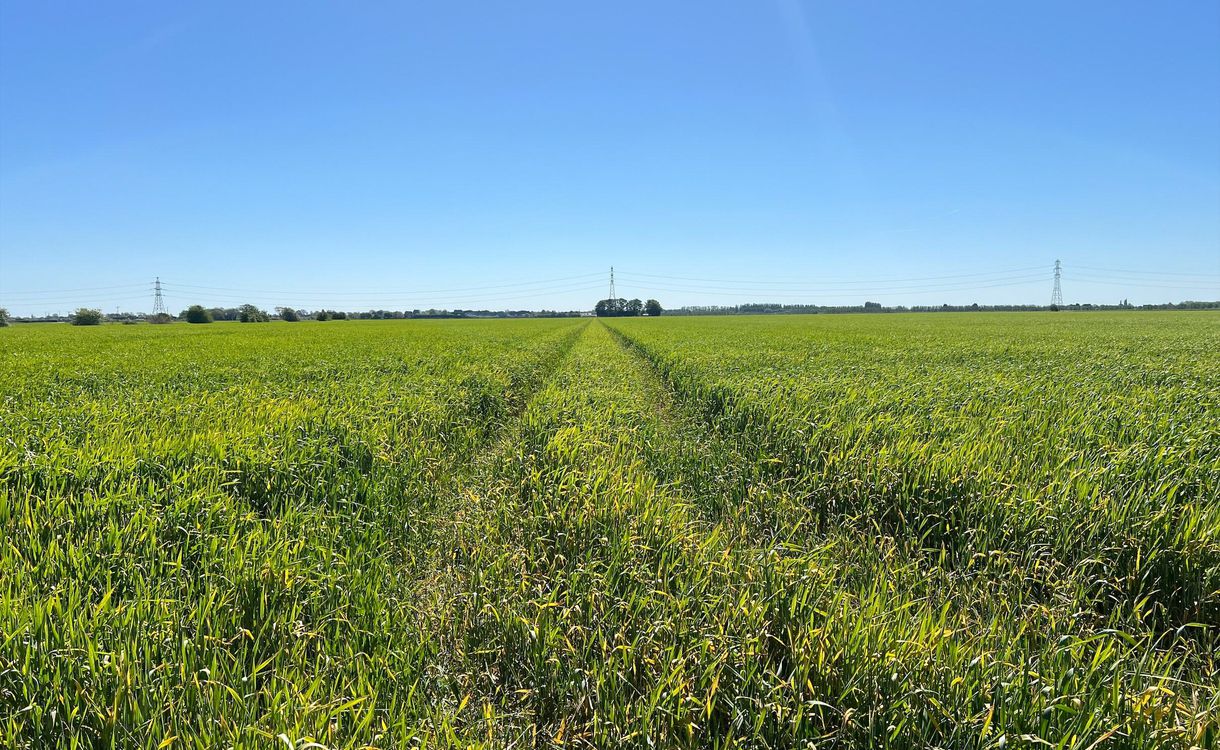
We recently visited an Agreena Regenerative Agriculture Farm with two UK-based clients, including Trainline and Ampa Group, to see firsthand how soil is turned into a climate asset.
Regenerative agriculture is an important part of the carbon removal puzzle, because soils are one of the biggest carbon sinks on earth. It is one of the most credible ways to embed carbon removal into national landscapes today, and can scale across millions of hectares.
“It was fantastic to take a group of colleagues to the Agreena Agricultural Project in Peterborough. Carbon offsetting can sometimes feel quite abstract, and as an organisation it’s easy to feel removed from the real impact happening on the ground. What was great to see is the close relationships and collaboration between the farmers, Agreena and Climate Impact Partners. I’m incredibly grateful to Climate Impact Partners, Agreena and the farm team for taking the time to show us the work firsthand, talk us through the science behind it, and help us better understand how our offsetting strategy is supporting more sustainable, regenerative agricultural practices. It was a great day out and we look forward to many more.” - Sarah Hammond, Senior Corporate Sustainability Manager, Trainline
Seeing a generational shift firsthand
Thomas Gent’s 800‑hectare farm has been in his family for four generations, producing crops such as triticale, wheat, oats, and barley on land that sits below sea level. Their transition to regenerative agriculture began in 2008 at a challenging time when wheat prices were low, fertiliser prices were high, and their farm needed to invest in new machinery.
Rather than maintain a system dependent on increasingly expensive inputs, the farm changed course to work more harmoniously with nature. For Thomas, regenerative agriculture is not an end goal, but a journey of continuous improvement, one that prioritises soil health and resilience for long-term productivity.
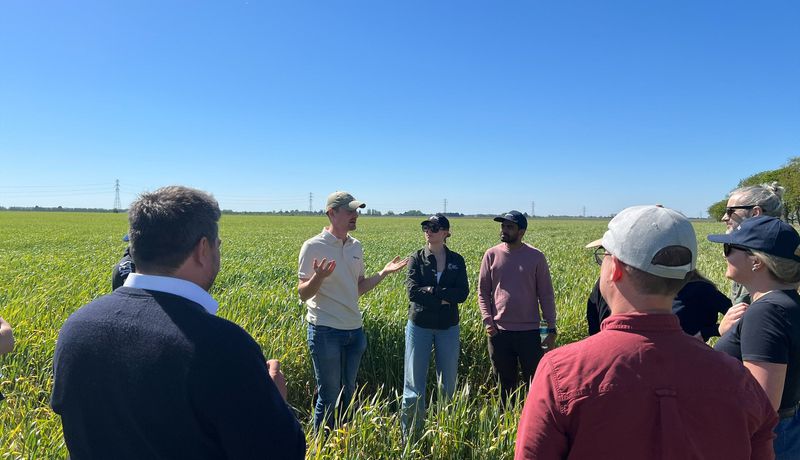
Visiting the Agreena Regenerative Ag Project
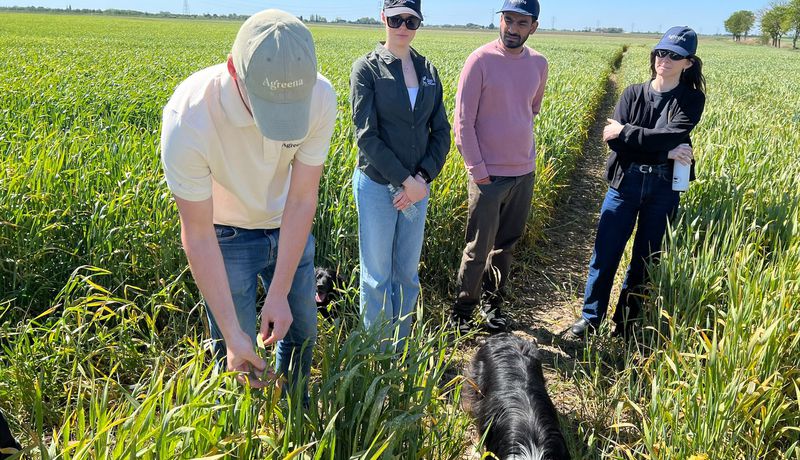
Visiting the Agreena Regenerative Ag Project

Visiting the Agreena Regenerative Ag Project
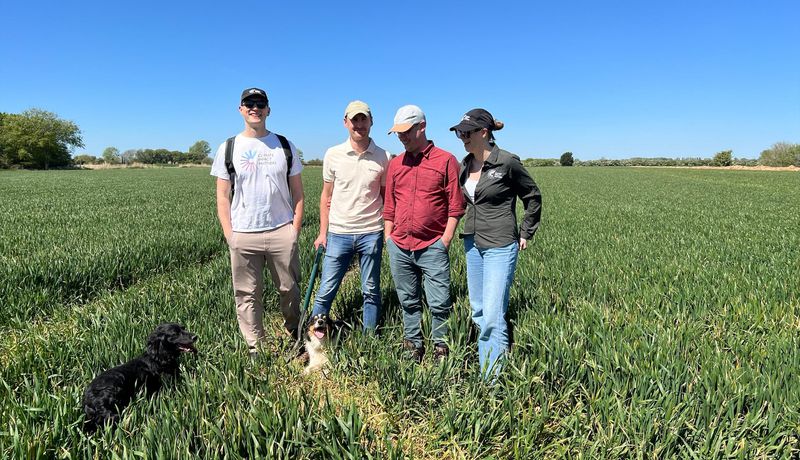
Visiting the Agreena Regenerative Ag Project

Visiting the Agreena Regenerative Ag Project
What regenerative agriculture looks like in practice
Farming is often thought of as a choice between two extremes: fully organic systems, or chemically led systems, relying heavily on synthetic fertilisers and pesticides. Regenerative agriculture offers a practical alternative, enabling farms to reduce their dependence on artificial inputs and work more closely with natural systems to restore soil health, while remaining financially viable in real-time farming markets against a backdrop of increasing weather extremes, dwindling governmental support and volatile market pricing.
On the farm we visited, practices includes:
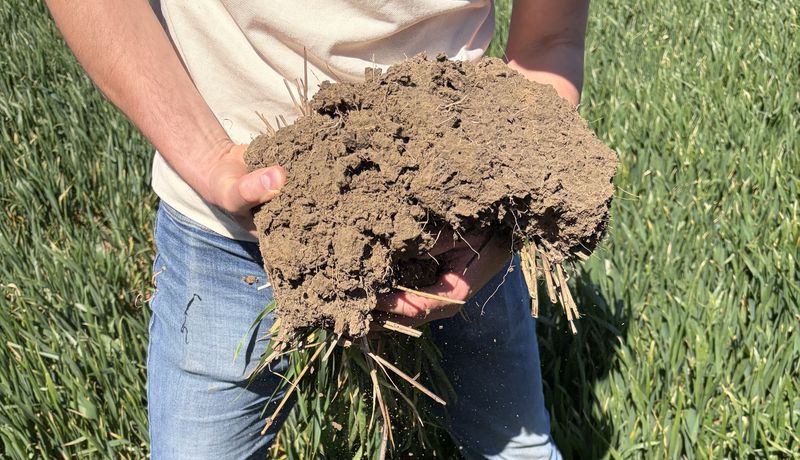
- Reducing the use of artificial fertilisers, and increasing organic inputs such as insect manure, which are less carbon‑intensive and help rebuild soil organic matter.
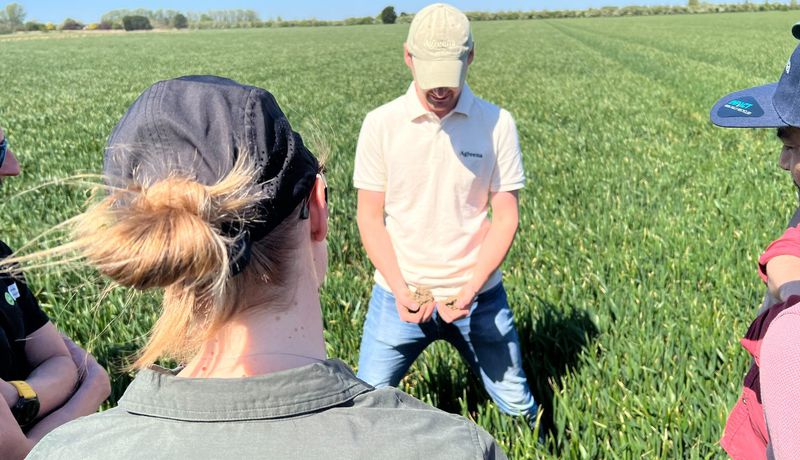
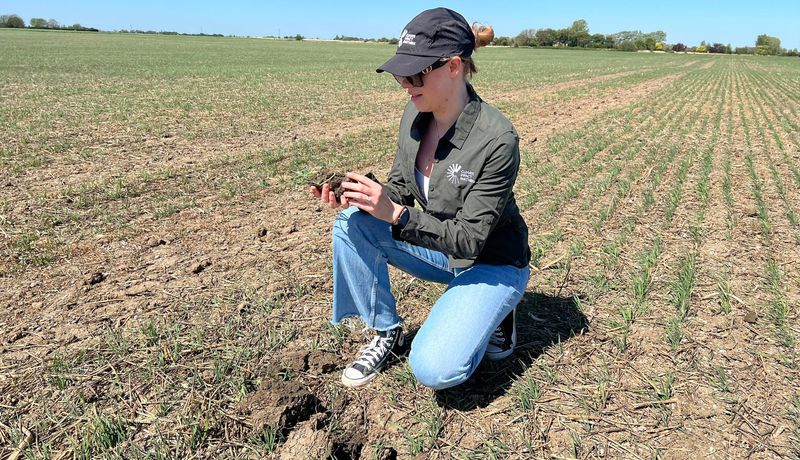
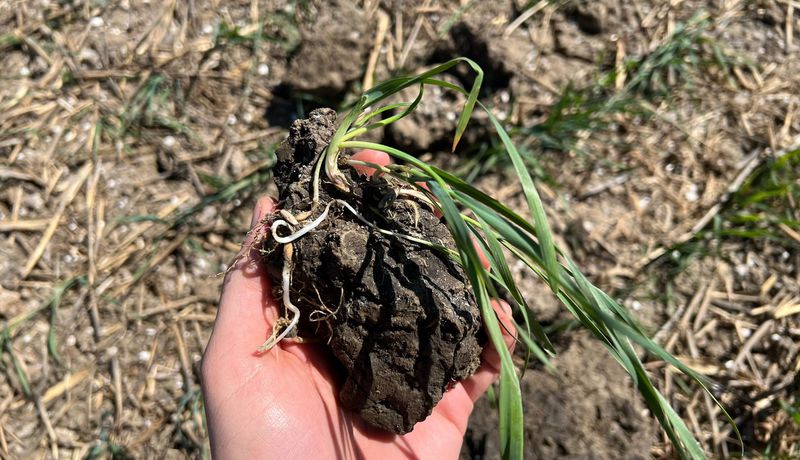
- Changing tillage practices. Conventional ploughing repeatedly releases stored soil carbon into the atmosphere. New machinery allows crops to be planted directly into the soil, without tilling or ploughing.
- Keeping soil covered year‑round. Bare soil is unnatural, wasting sunlight that could be powering photosynthesis to increase soil organic matter and leaving carbon in topsoil exposed. Cover crops, often beans or legumes, are planted between other crops to protect and regenerate the soil.
- Crop rotations. 7x types of crops are rotated across fields throughout the year, compared to 2x on a traditional farm. Triticale wheat remains the most profitable crop, while beans are among the least profitable, but deliver vital nutrients for soil health. Rotational crops protect the soil calibre and biome, retaining moisture beneath the roots to support overall land integrity.
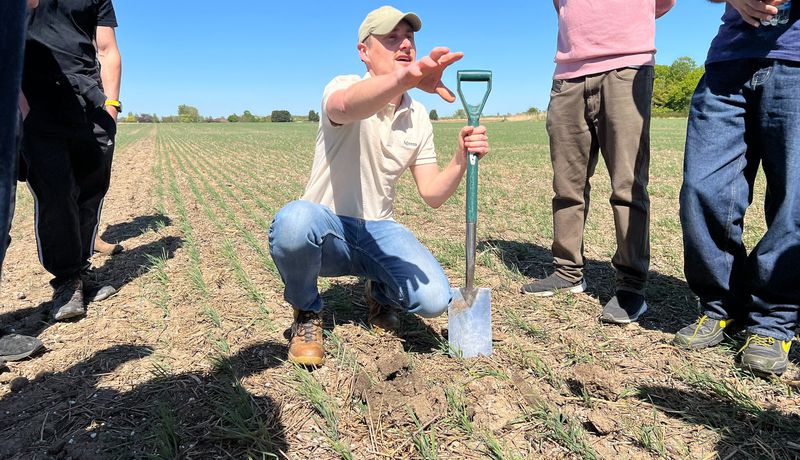
Regenerative agriculture in practice
Regenerative agriculture in practice
Regenerative agriculture in practice
Regenerative agriculture in practice
Regenerative agriculture in practice
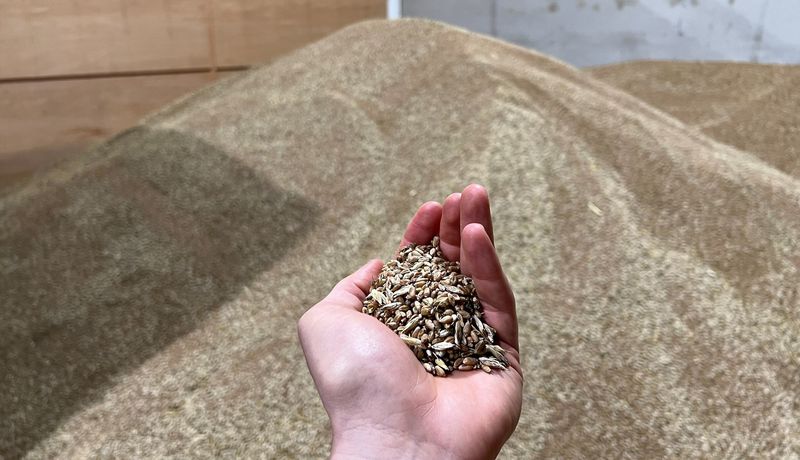
Regenerative agriculture in practice
Challenge of transitioning and the role of carbon finance
For many farmers, the biggest barrier to adopting regenerative agriculture is the transition period. It can take around five years for yields to recover to pre‑transition levels, as soil systems rebalance and organic matter builds back up.
That financial gap is real. And this is where carbon finance plays an instrumental role.
By rewarding measurable climate benefits during the early years of transition, carbon finance helps de‑risk change for farmers, making regenerative agriculture a viable option rather than a financial gamble.
The farm we visited continues to grow the same crops today, and in some cases achieves similar or better yields, while increasing the amount of carbon stored in the soil.
Scaling regenerative agriculture with Agreena
Agreena works with more than 2,500 farmers across 20 countries, supporting the transition of around five million hectares from conventional to regenerative agriculture. While the company was founded in Denmark and has a strong base in the UK and Scandinavia, much of their project areas are now in Eastern Europe, including Ukraine.
Agreena’s role is to collect and aggregate farm‑level data, and to work with Verra’s Verified Carbon Standard to enable third‑party verification and issuance of carbon credits. This aggregation model allows agricultural soil carbon projects to scale, something individual farms would struggle to achieve alone. By supporting farmers as they shift away from carbon-intensive practices, carbon finance helps unlock additional, durable carbon removals that would not otherwise occur.
Importantly, Agreena operates with the recognition that nature is not a clean dataset. Farmers operate within a biological system: rainfall varies, frost arrives unexpectedly, and outcomes cannot be controlled with the precision of an industrial process. Measuring and managing soil carbon involves a complex system of satellite monitoring and in-field soil sampling, requiring robust data models and conservative assumptions.
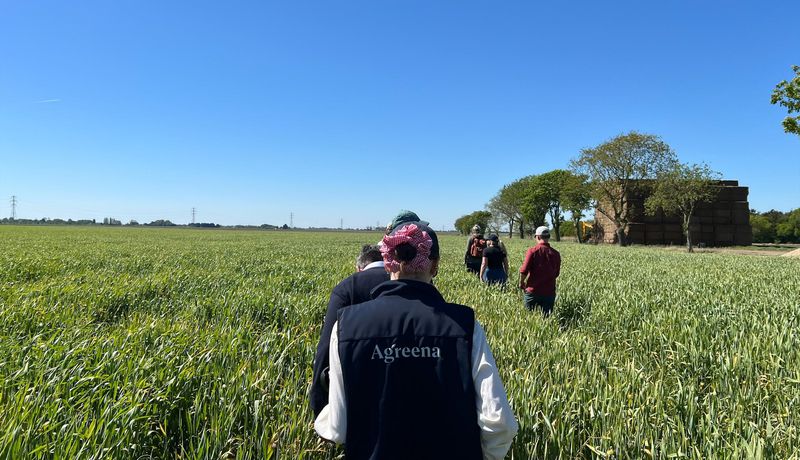
Scaling regenerative agriculture with Agreena
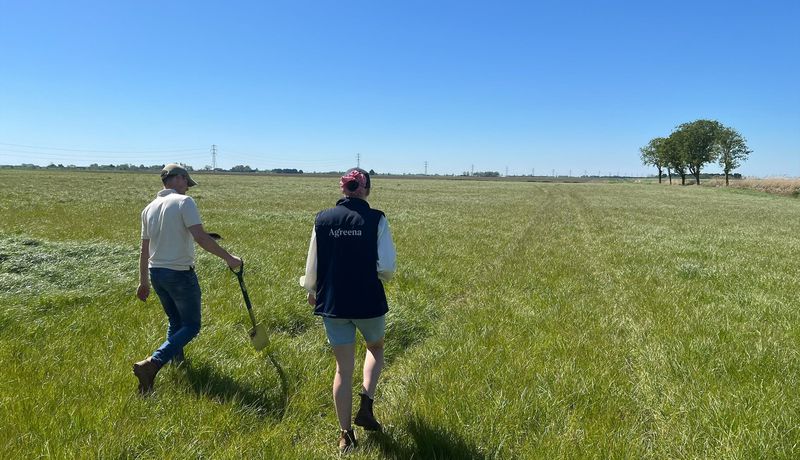
Scaling regenerative agriculture with Agreena
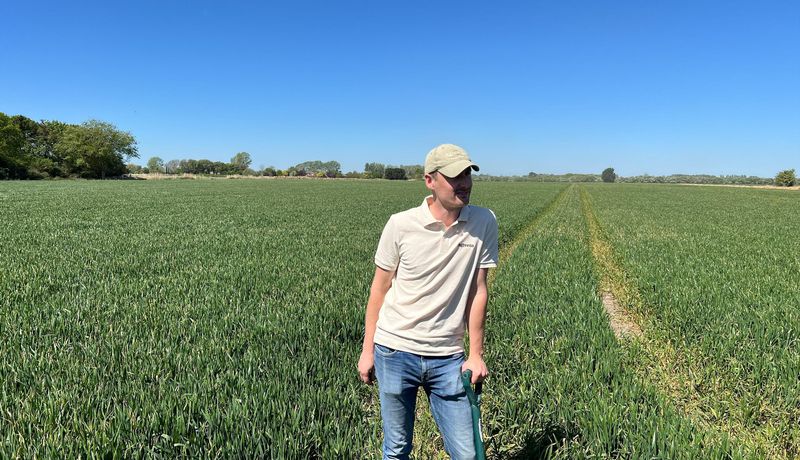
Scaling regenerative agriculture with Agreena
Why soil matters for climate and for people
Higher soil organic matter means healthier soils, stronger crops, better water retention, and more resilient farms. It also means more carbon stored safely underground.
For corporate buyers of carbon credits, regenerative agriculture projects offer something rare: climate action that is scalable and closely linked to the real economy. Soil carbon removal happens in tandem with food production, strengthens resilience to climate impacts, and delivers benefits that extend well beyond carbon alone.
If your company is looking to fund high-integrity removals, regenerative agriculture projects like Agreena not only transform farmers’ land, but also their livelihoods.
Three generations, one farm, and a future built on resilience
To see Agreena's regenerative agriculture practices in action, please watch this five-minute video
The Latest Insights From
Climate Impact Partners
From restoration to coffee: Aregawi's vision for Tigray
What started with planting trees led to something unexpected: coffee. Aregawi's story shows how carbon finance can create opportunities beyond carbon.
Read more
Back to School, Backed by Climate Action
New school campus highlights impact of Chahta Yakni Ishtaya Carbon Project
Read more
Why High-Impact Climate Projects Deserve a Place in Net-Zero Strategies
Why High-Impact Climate Projects Deserve a Place in Net-Zero Strategies
Read more