

Quiet Climate Action: Fortune Global 500 Climate Progress Continues
Download the full report to learn more about how climate actions and commitments are holding strong despite deadlines coming into focus and scrutiny rising around definitions
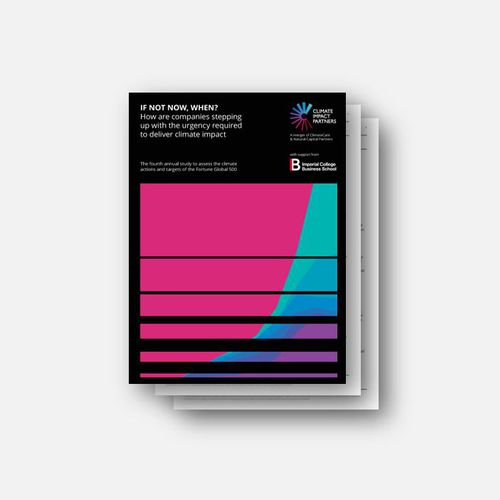
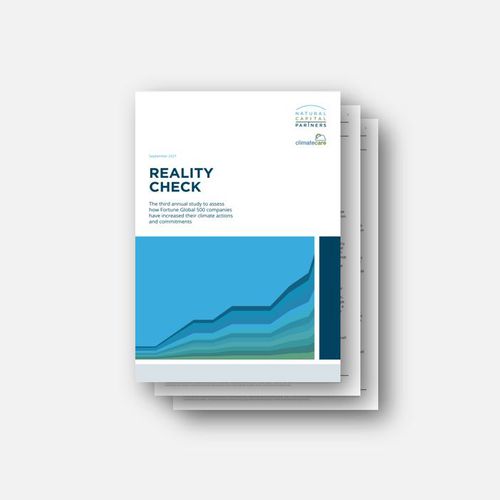
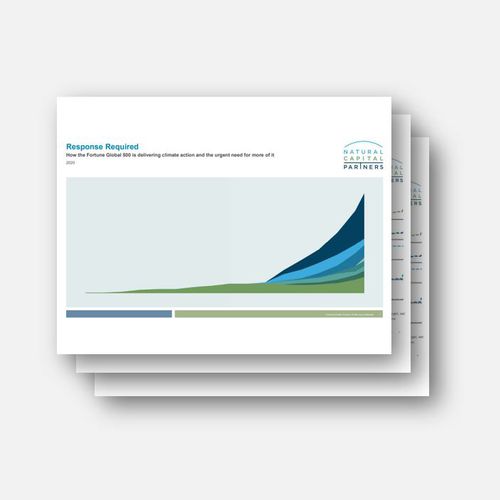
Our sixth annual report uncovers key insights and emerging trends in the climate commitments of the world’s largest companies.
Our newly formed Customer Advisory Boards, bringing together 18 sustainability professionals from companies with combined annual revenues of $400 billion, also offers their opinions on the challenges faced by large companies in the report.
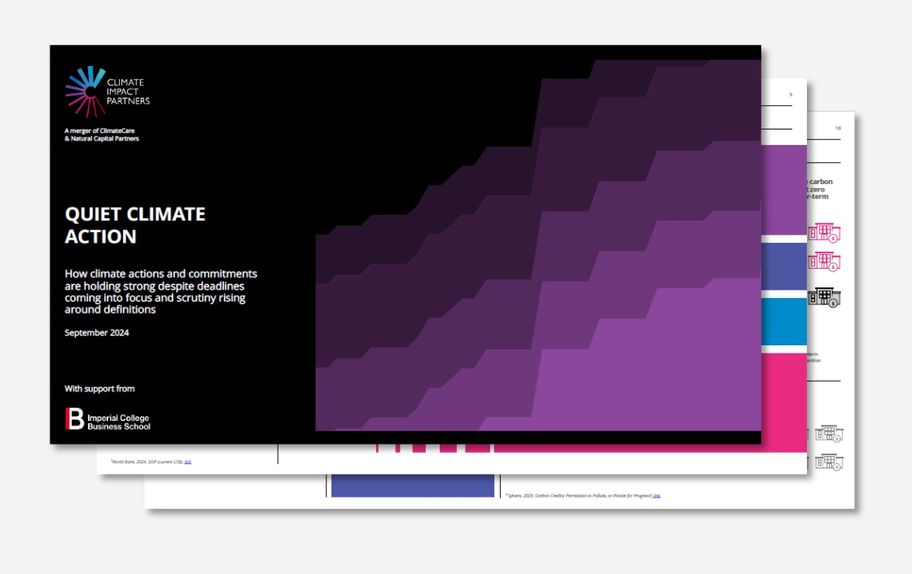
Download the full report to learn more about how climate actions and commitments are holding strong despite deadlines coming into focus and scrutiny rising around definitions
1. Despite external crises and ESG backlash, net zero commitments are up six percentage points this year
45% of companies plan to be net zero by 2050, up from 39% last year and dramatically up from 8% since 2020
2. More companies are planning to use carbon credits to reach their climate targets
42% of companies explicitly state they will use carbon credits to meet a carbon neutral or net zero target. This is up from 40% last year. By supporting verified carbon projects, businesses can enhance stakeholder communication, foster internal climate support and meet their climate objectives. Credits also enable companies to direct funds to impactful climate projects, often located in regions with a lack of investment in climate solutions.
3. Companies with carbon credits as part of their climate action plan are more likely to have more rigorous reduction targets
By putting a price on carbon in the business through carbon credits, companies pursuing carbon neutrality and taking action now are almost twice (1.7x) as likely to have near term Science Based Targets across the entire value chain (including Scope 3) than companies that are not carbon neutral or do not plan to be by 2030.
Download the full report to learn more about how climate actions and commitments are holding strong despite deadlines coming into focus and scrutiny rising around definitions
This is our sixth year tracking the growth of climate ambition of the Fortune Global 500, which are the top five hundred largest companies in the world by revenue. In 2023, they earned $41 trillion in total revenue, over one-third of global GDP, and employed more than 70 million people. The Energy Transitions Commission, an international think tank focused on economic growth and climate change mitigation, estimates $3.5 trillion per year of capital investment will be needed to build a net zero global economy by 2050. The Fortune Global 500 earned a total of $3 trillion in net profits last year, seemingly giving them the capacity to increase their climate investments and make a meaningful contribution to the global goal.
In addition to the importance of climate action within their own operations, Fortune Global 500 companies have significant influence on their suppliers, customers and the wider world of business and government. The efforts taken by the companies highlighted in this report can provide a benchmark for broader changes in the private sector sustainability landscape. However, the focus on this group does not diminish the value of many other businesses – small, medium, and large – throughout the world, who have also realized the urgency of our climate situation and are already making real change.
Understanding quality in an increasingly important area of climate action.
Read more
New school campus highlights impact of Chahta Yakni Ishtaya Carbon Project
Read more
New research among 600 senior climate decision-makers and CSOs across the UK and US shows carbon credits are delivering real value.
Read more