

Kirsty Schneeberger recently visited our new partner, the National Oceanography Centre, to discover more about the ocean and its vital role in removing carbon from our earth systems to help inform our approach to developing new innovative blue carbon credit methodologies.
One hundred and fifty years ago the Challenger Expedition set sail to discover all that it could about the vast ocean that for centuries had been the stuff of myth, legend, and intrigue. Departing in 1872 and returning some 1,250 days later in 1876, the vessel covered an astonishing 68,890 nautical miles, returning with a treasure trove of information about the mysterious underwater world. This was the most comprehensive mission to capture oceanographic data to date: the crew made observations focused on ocean depth, water current dynamics, salinity, temperature, and discovering new species that lived on the ocean floor – a depth that had been out of reach up until that point. In fact, the expedition discovered the Mariana Trench – which to this day is the deepest part of the ocean we have measured, at over 8km deep.
This expedition is celebrated as the birth of oceanography.
Fast forward 150 years to now, and we are still exploring the ocean, discovering even more about its incredibly valuable, rich, and diverse ecosystems. We have learned about the vast range of underwater species and understand how the ocean plays a vital role in keeping the earth’s systems in careful balance.
We also know now that it is one of our best defenses against climate change. For decades, as temperatures have been increasing and as more carbon dioxide and other GHGs have been pumped into the atmosphere, the ocean has stepped in to shoulder the majority of these changes.
The largest heat sink on the planet
Acting as a sponge mopping up the excess gases that would otherwise be making atmospheric concentrations of CO2 even higher than they are, and soaking up excess heat that the greenhouse effect is creating, the ocean has played a vital role in preventing the planetary system from being even more out of balance, but not without a cost to its own unique systems.
This is why Climate Impact Partners has an ocean ‘blue carbon’ program. Blue carbon is the term given to the dynamic relationship between the ocean and its role in managing our carbon systems. The science behind why trees and other natural flora sequester and lock in carbon is well-known and understood; but the role that ocean nature and ecosystems play in sequestering and locking-down carbon is less so.
We have partnered with ocean experts such as the National Oceanography Centre (NOC) to underpin our understanding of how to develop seascape projects such as restoring seagrass, salt marshes, and other coastal ecosystems, where the opportunities for removing carbon and other GHGs from our atmospheric systems are vast.
A world leader in oceanography
The NOC is a world-leading center for ocean knowledge, helping us to better understand the potential for ocean nature-based solutions and how to unlock these relatively untapped sources of carbon removal, and – crucially – biodiversity enhancement, by restoring natural ocean ecosystems to bring back our underwater biodiversity.
I recently joined the NOC for a tour of its facilities, based at Southampton University in the UK, as we launched our blue carbon partnership and saw their important work in action: from the sediment core sample room, to the now infamous 'Boaty McBoatface’, and peering into the jars of specimens from the ocean some 100 or more years old.
Climate history uncovered in ocean sediments
Sediment coring is where samples of the ocean floor, from the coast to thousands of kilometers into the ocean, are taken and analyzed to tell us what was happening in the ocean in the past, going back hundreds of thousands of years.
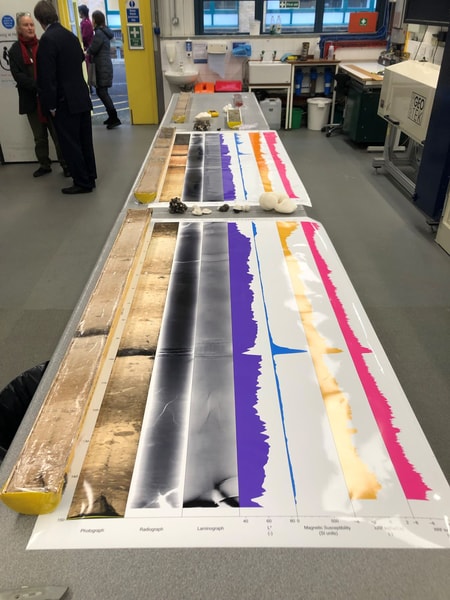
It is this sediment core sampling process that can unlock the potential for blue carbon projects around the world. We know that ocean plants such as seagrass and kelp, as well as seascape ecosystems such as salt marshes, absorb carbon but too little is known about the rate at which this happens and how long the carbon is locked in for. By taking and analyzing core samples from seagrass meadows, kelp forests, or salt marshes, we can build up a picture of how carbon has been absorbed over time and what conditions accelerate or decrease its pace of sequestration. This can inform the design of restoration projects to ensure that the best approaches are taken to optimize carbon sequestration and storage, as well as enable us to quantify the potential future carbon absorption to inform a carbon credit project methodology.
https://www.climateimpact.com/...Climate Impact Partners has a long history of methodology development. We authored the first Gold Standard cookstove methodology in 2007, which allowed carbon finance for clean cooking projects and we continue to innovate.
Other developments include:
Low-carbon vessels for high-quality carbon research
During the visit, I was also able to see close up some of the equipment NOC uses to enhance our knowledge of the deep ocean, including a fleet of underwater submarines. These low-carbon vessels can access parts of the ocean that otherwise remain out of reach including deep under glaciers to gather data about these unique marine systems. This has most recently enabled the NOC to understand what is driving the loss of ice from glaciers and help us predict future sea level rise as a consequence.
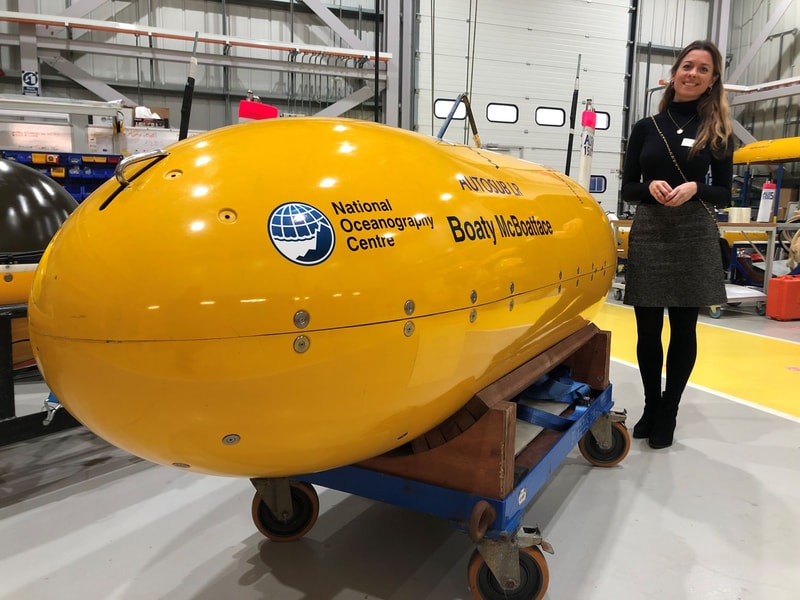
As we develop our understanding of the incredible value of whales and their contribution to carbon sequestration and health of the marine ecosystems, we also need to rely on such equipment to gather more detailed and precise information about these mammals and their impacts on the rate of carbon sequestration in the ocean.
The NOC also has capabilities to detect impacts of climate change up to 3 miles deep in the ocean in – and beyond – the ‘twilight zone’, where limited light makes it to that depth, including identifying how microplastics are impacting marine life at those depths.


As part of the tour, NOC’s CEO Ed Hill OBE shared the net zero vision for the future and made it clear that doing more to understand, and then mitigate and adapt to, climate change is at the heart of the NOC’s mission.
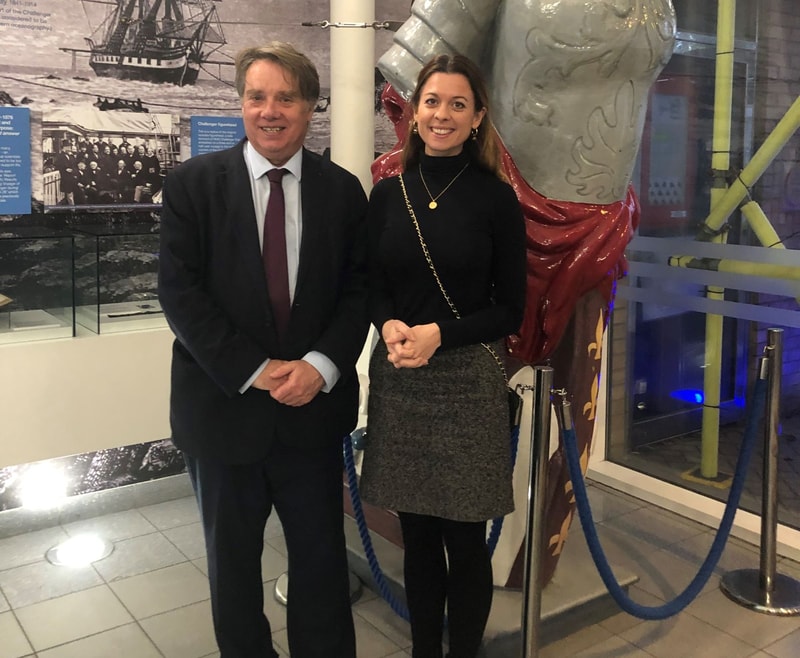
Organizations like the NOC have the expertise and equipment to do this work and are a crucial player in the nascent, but brimming with potential, blue carbon market. We are excited to be working with them and others to delve deeper into these blue carbon ecosystems to catalyze and scale blue carbon solutions.


