

What are REDD+ Projects?
REDD+ projects use carbon finance to fund community activities that reduce emissions from deforestation and forest degradation and enhance sustainable forest management. Currently, buying REDD+ credits is one of the best ways to direct private sector funding to the forest communities that are stewards of our remaining tropical rainforests.
Why is supporting REDD+ projects so important?
Supporting REDD+ forest protection projects is critical to reducing global carbon emissions.
- Every tonne of carbon lost to deforestation today could take years, even decades, to remove from the atmosphere and we are running out of time.
- Tropical rainforests are not only carbon rich, but also incredibly biodiverse and home to the majority of Earth’s plant and animal species.


What is the REDD+ framework?
In 2013, the REDD+ framework was created by the United Nations Framework Convention on Climate Change (UNFCCC) to reduce deforestation in developing countries. It had initially been excluded from the Kyoto protocol in 1997, because information and technology to guide measurement was not considered advanced enough.1
It was originally intended to accelerate national government action on deforestation, however, as government action takes time, it accepts voluntary subnational implementation in the interim.
Recognizing the vital role forests play in achieving the Paris Agreement’s goal of one gigatonne of greenhouse gas emission reductions from forests by 2025, Article 5 incorporates the REDD+ framework into Kyoto’s successor. This allows countries to use REDD+ to achieve their Nationally Determined Contributions (NDCs) towards the world’s plans to tackle climate change.
While lawmakers and governments develop their commitments and the details and mechanisms are finalized, voluntary carbon markets continue to play a vital role in protecting the world’s forests and their communities.
- What are the UNFCCC framework’s five REDD+ activities?
The REDD+ Framework defines these activities as:
- What’s the difference between REDD and REDD+?
REDD+ goes beyond the reduction of Emissions from deforestation and forest degradation, to include sustainable forest management practices and conservation activities, which enhance forest carbon stocks and improve the lives of those living within forest communities.
How can you learn more about REDD+ projects?
Watch the below webinar to learn more about the complexities of REDD+ projects from two of our nature-based solutions experts. Hear about:
- Avoiding planned and unplanned deforestation
- Establishing a baseline and project scenarios
- Measuring verified emission reductions
- Managing leakage and buffer pools
What makes a high-quality REDD+ project?
As discussed in the webinar above with members of our nature-based solutions technical team, high quality REDD+ forest projects should demonstrate the following characteristics:
- Additionality: the project should be achieving emissions reductions that would not have occurred in the absence of the project due to planned or unplanned deforestation.
- Baseline: the project should have a robust and transparent baseline of emissions from deforestation and forest degradation to accurately measure the emissions reductions of the project's REDD+ activities.
- Leakage: the project should monitor and account for unintended increases in emissions outside of the project area such as illegal logging shifting to the area just outside the project zone.
- Third-party verification: the project should have a transparent and robust monitoring, reporting, and verification system to ensure that the emissions reductions are accurately measured.
- Permanence: the project should manage a buffer pool of credits set aside to cover any unforeseen loss events and engage the community, so they are committed to the long-term stewardship of the forest carbon stocks.
- Co-benefits: the project should respect indigenous peoples' land rights, include the local communities in decision making, conserve precious biodiversity, and improved livelihoods based on sustainable income alternatives that do not rely on deforestation or forest degradation.
What kind of activities would you expect in a REDD+ project?
Carbon finance, through the sales of verified emission reductions, provides funding for sustainable management of the forest through community-led activities that address the specific drivers of deforestation in the local area and create alternative livelihoods through capacity building. Activities build resilience and can help with climate change adaptation.
Common carbon financed REDD+ activities include:
- Farmer training on sustainable land management and biodiversity conservation
- Non-timber forest product cooperatives like fruits, nuts, honey and cocoa
- Unarmed forest patrols to prevent illegal logging or poaching
- Wildfire prevention and firefighting brigades
- Support in legal recognition of land rights
- School facilities and supplies
- Clean water and sanitation
- Technology access
- Medical clinics


Project Drawdown on forest protection
Project Drawdown is the world’s leading resource for climate solutions with a mission to help the world stop climate change as quickly, safely, and equitably as possible | drawdown.org/solutions/forest-protection
"In their biomass and soil, forests are powerful carbon storehouses. Protection prevents emissions from deforestation, shields stored carbon, and enables ongoing carbon sequestration.
Mature, healthy forests have spent decades or centuries accumulating carbon through photosynthesis and storing it in soils and biomass. Today forests are rapidly being cleared and degraded, releasing this stored carbon loss and reducing forests’ ability to provide habitat, control erosion, build soil, regulate water quality and supply, and remove air pollution.
Since humans began farming, the number of trees on Earth has fallen by 46 percent. Emissions from tropical deforestation and forest degradation alone today are estimated at 5.1–8.4 gigatons of carbon dioxide equivalent per year—a staggering 14–21 percent of anthropogenic emissions (International Sustainability Unit, 2015). Forest protection could reduce these emissions by 5.56–8.83 gigatons by 2050."
The SDG impacts of forest conservation (REDD+) projects
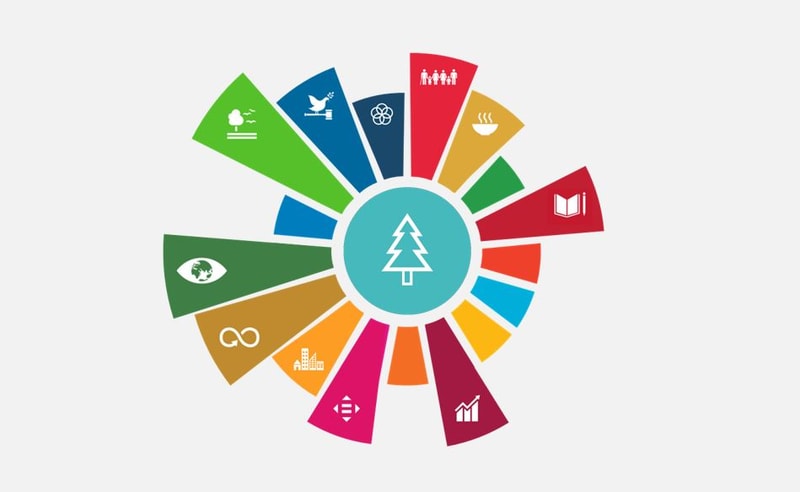
In addition to delivering emissions reductions, which help to combat climate change (SDG 13) REDD+ forest protection projects are the only carbon project type today that can support all 17 of the United Nations Sustainable Development Goals (SDGs). These include:
- End poverty in all its forms everywhere
- End hunger, achieve food security and improved nutrition and promote sustainable agriculture
- Ensure healthy lives and promote well-being for all at all ages
- Ensure inclusive and equitable quality education and promote lifelong learning opportunities for all
- Achieve gender equality and empower all women and girls
- Ensure availability and sustainable management of water and sanitation for all
- Ensure access to affordable, reliable, sustainable and modern energy for all
- Promote sustained, inclusive and sustainable economic growth, full and productive employment and decent work for all
- Build resilient infrastructure, promote inclusive and sustainable industrialization and foster innovation
- Reduce inequality within and among countries
- Make cities and human settlements inclusive, safe, resilient and sustainable
- Ensure sustainable consumption and production patterns
- Take urgent action to combat climate change and its impacts
- Conserve and sustainably use the oceans, seas and marine resources for sustainable development
- Protect, restore and promote sustainable use of terrestrial ecosystems, sustainably manage forests, combat desertification, and halt and reverse land degradation and halt biodiversity loss
- Promote peaceful and inclusive societies for sustainable development, provide access to justice for all and build effective, accountable and inclusive institutions at all levels
- Strengthen the means of implementation and revitalize the Global Partnership for Sustainable Development
Looking for solutions?
REDD+ carbon offset project methodologies
All the carbon finance projects we support are independently validated and verified in line with recognized global standards, including the Verified Carbon Standard (VCS), the Gold Standard, the American Carbon Registry (ACR) and the Climate Action Reserve (CAR).
Here are some examples of REDD+ carbon project methodologies used in the Voluntary Carbon Market.
VCS – Verified Carbon Standard:


