

What is your role at Climate Impact Partners?
I’ve worked at ClimateCare – now Climate Impact Partners for four years – helping our project partners with Carbon Asset Development – which is the measurement and verification of emissions reductions that allow the project to be issued with carbon credits. Over that time, I’ve worked with a variety of project technologies from water filtration projects to construction projects using stabilised-soil blocks.
Why do our partners need a specialist to help them?
Carbon asset development is a sustainable revenue stream for projects, allowing them to access carbon finance by selling independently verified carbon credits.
Developing carbon projects requires knowledge and experience of the standards, the methodologies and how they work, to successfully take a project through registration, validation, and verification. This is a specialised skill set and something that many of our project implementation partners do not have.
Our team has worked in this area since the voluntary carbon markets were formed back in 1997, so have observed and participated in all its progression since then. Some of my colleagues helped write some of the methodologies we use. This level of expertise means we know this job inside out. It is easier than if they were trying to navigate it themselves.
We can also identify opportunities to quantify other benefits beyond emission reductions, such as fulfilling other sustainable development outcomes.
Through the process, our project partners gain knowledge, as we are able to train them on how they can continuously monitor their activities. And we sell the carbon credits on their behalf, ensuring they get the revenue for the project to be sustainable.
How is carbon project development changing?
We continue to develop new methodologies, most recently the Methodology for Metered & Measured Energy Cooking Devices, which include metered electric cooking devices and metered LPG stoves. The methodology is applicable for cooking devices that measure direct fuel/ energy usage and get real-time data that would otherwise have been monitored through surveys. This data is used to determine emission reductions per device. Getting real-time data helps the project developers conduct maintenance and repairs with ease as they can tell which devices are not working. This also makes monitoring and verification easier, and the data received is more accurate.
How do you measure the impact of projects and ensure quality?
We are hands-on with regular project visits. We meet the project partners, end-users, field enumerators, and external auditors, known as Validation/Verification Bodies (VVBs). During the site visits, we might conduct training, do baseline surveys, carry out monitoring surveys, or support the external audits with the VVB.
We interact with the communities who are benefiting from the project, and get their feedback too. This helps us suggest improvements to the design of a project to better suit the needs of the end users. It also helps improve management and produce better ways of monitoring and reporting.
In one of my most recent visits I went to Aqua Clara, a water filtration project in Kenya. The project works in 23 counties, and I was there to train enumerators for the annual monitoring survey exercise. The exercise is done to assess the usage of the water filters and also measure the water quality. During the field surveys, the enumerators are trained on how to ask survey questions and train the households on filter usage best practices. Enumerators are also trained on simple maintenance of the water filters which they can do for households and advised to inform the office about any key issues for future follow-up.
How has technology changed your job?
Over the last few years, we have been using more digital tools to help measure our projects. For example, the Mwater app helps our Aqua Clara project team collect data and submit it. This makes data collection and analysis easier. There is a reduced risk of incomplete data as the app is designed to ensure all the data is complete and it makes the process of running a survey more efficient.
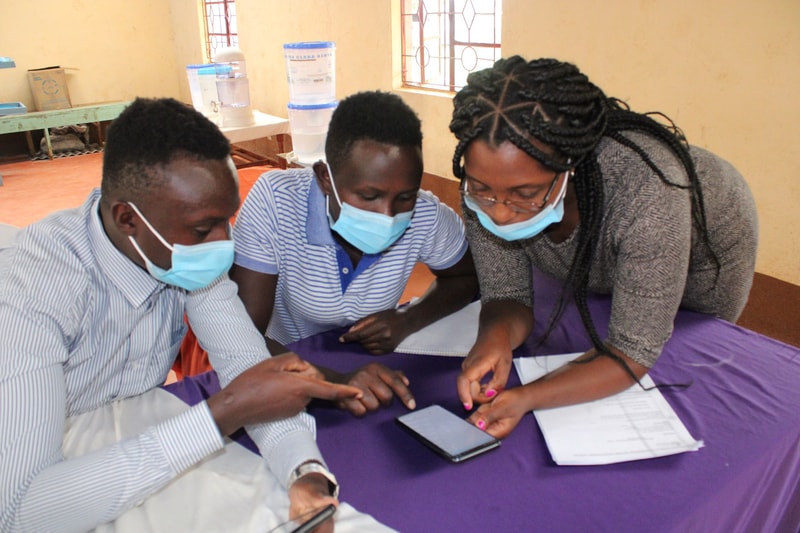
Our push to increase digital approaches to monitoring, reporting and verification continues – as one example, the recently approved Gold Standard methodology we worked on with the Modern Energy Cooking Services programme (MECS) means that projects providing energy-efficient cookers in developing economies can monitor usage and energy consumed more efficiently and accurately using technology rather than expensive and time-consuming surveys.
We believe these digital approaches will increase in the future and it is something we are focused on across the breadth of our work.
What do you find most enjoyable about your job?
Implementing high quality carbon reduction projects, like those we specialise in, doesn’t just have a climate impact. These projects also benefit local communities too. And I love getting to see this first hand.
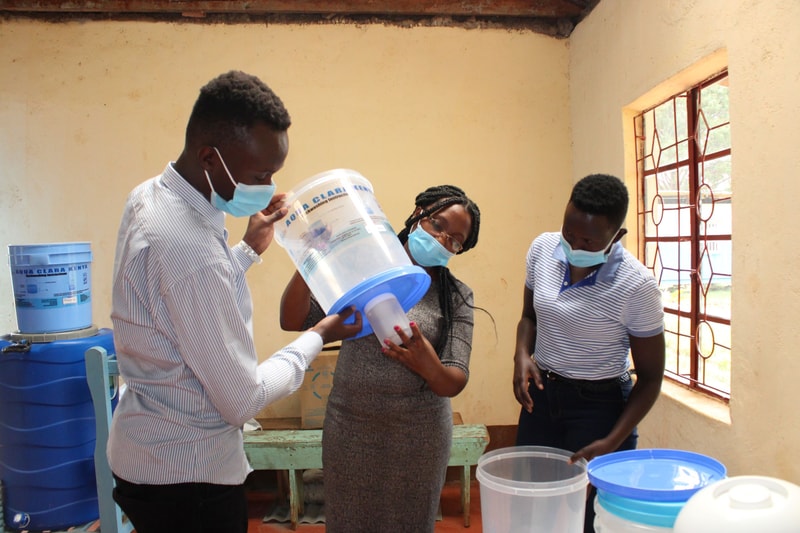
The project I have just visited – Aqua Clara – creates employment for the locals who can earn an income through working for the project itself, selling the filters directly, or conducting annual monitoring surveys. The community is trained on various aspects of water, sanitation, and hygiene, which means more households now appreciate and are more knowledgeable about these matters - which is a good thing, as it means health issues related to the waterborne disease are reduced. Also, there is a significant reduction of indoor air pollution associated with boiling water. You can also see that there is a lot of money and time savings from the implementation of the project too, as people no longer need to collect or purchase firewood to boil water. And of course, reduced waterborne diseases means no money spent on medicine and no missing school for children. Plus good health = more productivity.


