

Climate action isn’t just about reducing emissions, it’s about creating solutions that deliver measurable benefits for people and the planet. The Community Woodland Restoration Project in Ethiopia, developed under the Plan Vivo standard by Climate Lab, is a prime example of how high-integrity carbon projects can restore ecosystems, empower communities, and help businesses meet their sustainability goals.
To dive deeper into what makes this project stand out, we spoke with Sil Lanckriet, co-founder from Climate Lab, a key partner driving innovation in nature-based solutions. Sil shares insights on transparency, governance, measurable impact, and why these elements matter for companies looking to build trust and demonstrate real climate leadership.
BringingClimate Action to Life with Derwent London and Climate Lab
Watch the full webinar to learn how innovative climate projects and corporate strategies are shaping a net zero future and delivering business value.
Project Foundations and Vision
What is the Community Woodland Restoration project in Ethiopia?
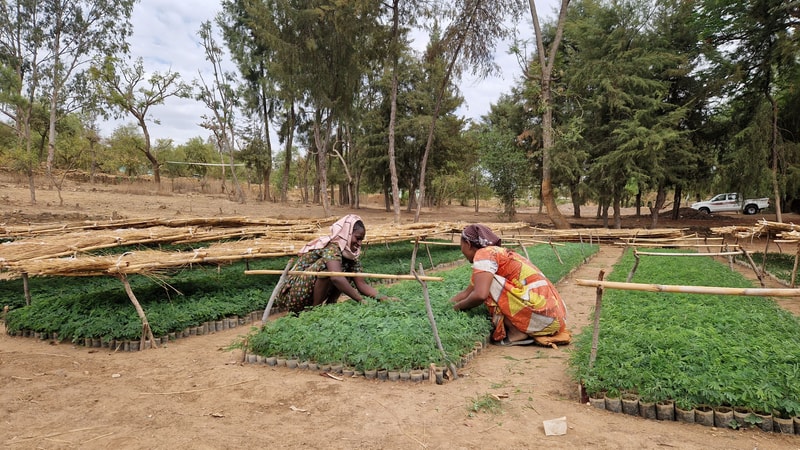
Sil: The Community Woodland Restoration project, also known as EthioTrees, supports smallholders farmers in the North Ethiopian Highlands by restoring degraded areas where cattle grazing is restricted. It helps local people in implementing enrichment planting, adopting improved management practices, and installing distillation units to produce frankincense oil and beehives for honey production.
EthioTrees leads the on-the-ground work in Ethiopia while Climate Lab serves as the coordinating and design partner, providing project management, technical oversight, and strategic collaboration to ensure long-term impact and integrity.
How does the Plan Vivo certification shape the project’s approach and credibility?
Sil: The Plan Vivo certification provides a rigorous framework that guides the project’s design, implementation, and monitoring. It sets clear social and environmental standards and requires regular third-party audits to ensure transparency and accountability. Plan Vivo focuses exclusively on community-based land-use and forestry projects, making it a critical standard for land-owned initiatives.
One key requirement is that at least 60% of the income from carbon credit sales are reinvested into the local communities through social projects, helping ensure that they benefit meaningfully from the project.
What makes this project stand out among nature-based solutions?
Sil: Its unique blend of community leadership and ecological restoration. By combining strong environmental outcomes with meaningful social impact, the project sets a powerful example of high-integrity, community-driven climate action.
Key differentiators include:
- Community-led design and development, ensuring local ownership and relevance.
- 60% of revenue goes directly to communities, reinforcing transparency and equitable benefit-sharing.
- Reliable and proven carbon credit issuances since 2016.
- Ex-post removal credits, which are unique among many Plan Vivo-certified projects.
- Native species restoration, central to ecological activities.
- Regular, transparent reporting that builds trust with companies, and stakeholders.


How does the project balance ecological restoration with community empowerment on the ground?
Sil: Local communities are designing and implementing restoration activities, such as reforestation, soil conservation, and biodiversity protection. Through inclusive decision-making and benefit-sharing, they not only restore their landscapes but also improve livelihoods, infrastructure, and resilience.
Transparency and Governance
How are decisions made on where and how funds are allocated within the project?
Sil: The project’s fund allocation process is transparent, community-led, and fully traceable, ensuring that every dollar directly supports verified sustainability outcomes.
When a company purchases carbon credits, payments are allocated to specific community forests within the project area. Community Councils are notified of the exact amount received, with 60% of the funds earmarked for local investment under the Plan Vivo Standards. These councils collectively decide how to use the funds, ensuring that decisions align with social, environmental, and sustainability priorities.
Once consensus is reached, the project team manages a competitive bidding process to select contractors for approved investments. Construction and implementation can begin and are closely monitored, with quality checks by EthioTrees engineers and local representatives. Post-construction follow-ups are done to finalize details such as furnishing and painting, especially for schools.
All financial flows and project activities are documented and shared with Community Councils. Each client payment is linked to a specific community forest, creating a clear and traceable connection between investment and impact. The Plan Vivo certification framework and regular external audits further verify that funds are used appropriately and deliver measurable social and environmental benefits.
Measurable Impact and SDG Alignment
How does the project measure both carbon outcomes and co- benefits, such as community wellbeing or biodiversity?
Sil: Carbon outcomes are measured through standard methodologies aligned with Plan Vivo requirements.
Co-benefits like biodiversity and social impact are tracked using tailored, field-based approaches designed to be both scientifically robust and locally meaningful.
Biodiversity is monitored through over 500 field plots (each 20m x 20m), where the Shannon Index is calculated to assess species diversity. This allows the team to understand where biodiversity is increasing and how it evolves over time.
Social impact is assessed using a participatory methodology developed by the project team. This includes:
- A shared vision (participatory theory of change), developed with communities to define long-term goals.
- Community-led indicator selection, so that progress is measured against what matters most to local people.
- Inclusive tracking tools like proportional piling, where community members use objects (like stones or nuts) to visually represent changes, especially helpful in areas with low literacy.


What data, methodologies or digital tools are used to monitor and report progress over time?
Sil: The project uses a combination of digital tools and structured methodologies to ensure accurate, real-time monitoring and reporting:
- Field Applications: data is collected directly from the field, using GPS-enabled tablets equipped with GIS and satellite imagery to log activities from project sites. These include tree planting, stone bund construction, and infrastructure projects like schools and roads. The data is verified through internal checks by project managers and engineers, as well as reviewed by external auditors and Plan Vivo to ensure accuracy and integrity.
- Client Portal: A dedicated portal is currently being developed to allow companies to track the progress of their investment in real time. All field data is fed into a central system that supports the portal. This system is maintained by data consultants and project managers across local and international offices, with multiple layers of internal checks to ensure accuracy and consistency.
Together, these tools enable the project to monitor environmental and social outcomes continuously, while providing companies with clear, verifiable insights into the progress and impact of their contributions.
How does the project ensure its work contributes meaningfully to the UN Sustainable Development Goals (SDGs)?
Sil: The project aligns with the SDGs by embedding community-led development priorities into its impact tracking. Communities identify what matters most to them, such as clean water, food security, education, or better infrastructure, which naturally correspond to key SDG indicators. This approach ensures that impact is not only felt on the ground but also contributes to broader international sustainability efforts.
Corporate Impact with Derwent London
What type of impact reporting can companies expect?
Sil: Companies purchasing carbon credits from the EthioTrees project receive annual impact reports that detail how the 60% community allocation was used, which community forests were involved, the decisions made locally, and the progress of funded investments.
Can you share an example of a company supporting this project?
Sil: Derwent London, the British-based property investment and development company, recently supported the EthioTrees project by purchasing over 17,200 high-integrity carbon credits – demonstrating its commitment to impactful climate solutions on its journey to net zero. The company aims to achieve net zero by 2040, targeting a 90% reduction in absolute Scope 1, 2, and 3 emissions from a 2022 baseline.
What is the tangible impact their investment has created on the ground?
Sil: Through a collaborative fund allocation fund process with 20 local community forests, Derwent London’s investment is driving tangible improvements for people on the ground, including:
- 2 new health centres improving healthcare access for local communities, aligning with SDGs 3 ‘Good Health and Wellbeing’.
- 2 new schools with 9 classrooms to expand access to education, aligning with SDGs 4 ‘Quality Education’.
- 1 deep well providing safe, reliable drinking water, aligning with SDGs 6 ‘Clean Water and Sanitation’.
- 950 solar panels installed to deliver clean, renewable energy for families who don’t have access, aligning with SDGs 7 ‘Affordable and Clean Energy’.
- 34 km of new roads enhancing connectivity for trade and essential services, aligning with SDGs 9 ‘Industry, Innovation and Infrastructure’.
One key requirement is that at least 60% of the income from carbon credit sales are reinvested into the local communities through social projects, helping ensure that they benefit meaningfully from the project.
How does transparency strengthen brand trust, stakeholder confidence, and supply chain integrity for companies?
Sil: Transparency strengthens brand trust, stakeholder confidence, and supply chain integrity by showing exactly how climate investments are managed and what impact they achieve. When companies openly share how funds are allocated, how projects are verified, and the outcomes delivered, stakeholders see that the business is credible and committed. It also reduces risks, ensures ethical practices in the supply chain, and builds long-term partnerships, turning climate initiatives into a real strategic advantage for a business.
Looking Ahead - What’s next for the project?
Sil: EthioTrees has ambitious plans to continue expanding the project. Currently, many neighboring communities are on a waiting list to join. Funding from carbon credit sales is essential to enable this growth.
Looking for SAF certificates?
Project video: Exclosures for landscape restoration in Tigray
Watch the video to see how community-based projects restore degraded ecosystems and how the Ethiotrees project uses exclosures - community-managed areas that help lands recover from deforestation, overgrazing, and unsustainable use. Project Coordinator Seifu Gebreslassie explains how exclosures work, why they matter, and the vital role communities play in their success.


