Super pollutants are gaining attention. Here's why quality should too.
 Written by Will Linnell
Publié 16 septembre 2026
4 MIN READ
Written by Will Linnell
Publié 16 septembre 2026
4 MIN READ
Super pollutants have become a growing focus for policymakers, standards bodies, project developers and organizations pursuing ambitious climate goals. As that interest grows, so does an important question: how can organizations identify high-quality projects and tell credible climate impact from headline claims?
This article looks at why super pollutants are attracting greater attention, the types of projects that address them, and the questions organizations should ask when assessing project quality.
What are Super Pollutants?
Super pollutants are a group of atmospheric pollutants that have a disproportionately large impact on warming compared to carbon dioxide and, in many cases, also contribute to poor air quality. They include methane released from waste and energy infrastructure, nitrous oxide from industrial and agricultural processes, and fluorinated gases used in refrigeration and cooling systems. Collectively, they are estimated to be responsible for approximately half of today's warming.
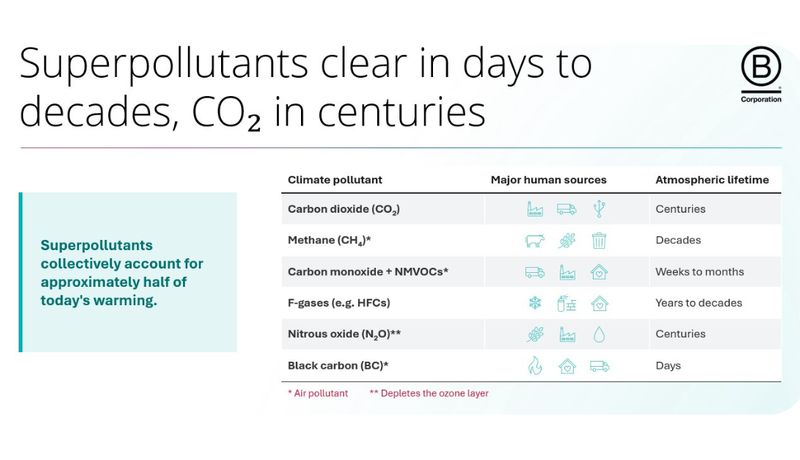
Adapted from Climate & Clean Air Coalition (CCAC) and IPCC AR6 WGI (2021) data on superpollutants and atmospheric lifetimes.
Why Super Pollutants are Moving Up the Agenda
The growing focus on super pollutants is being driven by a convergence of science and policy.
Research continues to highlight the role super pollutants play in current warming and the potential climate benefits of reducing them. Unlike carbon dioxide, many super pollutants remain in the atmosphere for shorter periods, though their impact in that shorter time period is more significant, meaning reductions can have a more immediate effect on warming rates.
At the same time, policymaking is accelerating. The European Union has introduced dedicated methane regulation, while international initiatives such as the Global Methane Pledge have brought unprecedented attention to methane mitigation as part of broader climate action. Organizations including UNEP and the Climate and Clean Air Coalition continue to position super pollutants as an important complement to long-term decarbonization efforts.
This combination of scientific consensus and policy momentum is helping drive greater interest in projects that address super pollutants. However, growing interest is also driving greater scrutiny.
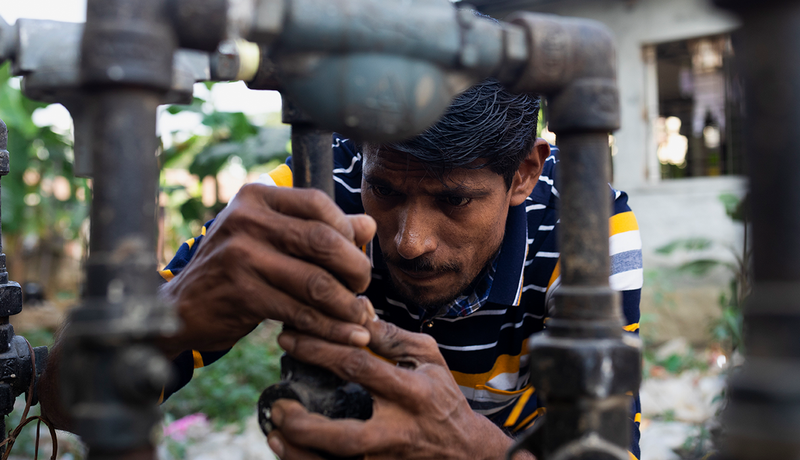
Dhaka Methane Leak Repairs, Bangladesh
From Project Type to Project Quality
As super pollutants move further into the mainstream climate conversation, it is easy to focus on project categories. Is it a methane project? Is it aligned with current policy priorities? Does it address a recognized super pollutant? Most projects fall into a handful of categories: methane capture from waste and energy systems, refrigerant management and destruction, nitrous oxide abatement, and methane leak detection and repair programs.
These are useful starting points, but they are rarely the questions that determine quality.
The more important question is how confidently a project's impact can be measured, monitored and verified, and how considerations such as additionality, leakage and permanence are addressed where relevant.Take super pollutant projects as a group. Whether a project targets methane, nitrous oxide or fluorinated gases, the credibility of its impact can vary significantly depending on project design, monitoring systems, operational performance and verification processes. The difference is often found in how a project operates in practice rather than how it is described on paper.
Advanced Refrigeration Solutions, USA and Canada, destroys refrigerants with a high global warming potential. Dhaka Methane Leak Repairs, Bangladesh, reduces methane losses from gas infrastructure. The two address different super pollutants through different approaches. What they share is a reliance on robust methodologies, transparent monitoring, independent verification and strong operational oversight.

Advanced Refrigeration Solutions, USA & Canada
Five questions to ask when assessing super pollutant projects
- How is performance monitored?
- How are reductions quantified?
- Is evidence readily available?
- Are appropriate assumptions being made?
- How are additionality, leakage and permanence addressed where relevant?
These are the questions that separate project categories from project quality.
What quality looks like in practice
At Climate Impact Partners, this is the test every super pollutant project has to pass before it enters the portfolio.
Every carbon project we supply must pass our 10-stage due diligence process, which assesses environmental integrity, delivery risk, reputational considerations and project partner credibility. We combine recognized market integrity frameworks, independent third-party screening, ongoing project monitoring and our own technical assessment of project quality.
Ratings and certifications are a useful starting point, but they are not the finish line. We challenge external assessments rather than simply accepting them, and the process is designed to surface risks that ratings, certifications or third-party reviews can miss. Around one in five projects rated BBB or higher fail our initial reputational risk screening, which illustrates why independent assessment still matters.
That distinction matters more as interest in super pollutants grows. A larger pipeline of projects and methodologies does not lower the bar. Assumptions still need testing, performance claims still need independent assessment, and every project still has to earn its place on its own merits. Project quality, not market momentum, decides what we supply.
The core principle stays the same. Project labels alone do not determine quality. Credible climate impact is built on robust methodologies, transparent monitoring, strong project partners and independent verification.
Looking Ahead
Interest in super pollutants is likely to continue growing as organizations look for ways to complement long-term decarbonization efforts with interventions that can help address near-term warming.
The conversation will increasingly move beyond whether super pollutants matter and towards how quality is assessed. The organizations best positioned to navigate that shift will be those that look beyond project descriptions and focus on the factors that ultimately determine credibility: methodology, monitoring, verification and transparency.
Interested in understanding how high-quality super pollutant projects are assessed and verified? Explore our portfolio of high-quality climate solutions and learn how rigorous due diligence helps build confidence in climate impact.