
The Growing Role of SAF Certificates in Corporate Net‑Zero Strategies

Written by Audrey Massy Publié 30 mars 2026 3 MIN READ

Business travel can be the largest and hardest-to-reduce part of a company’s Scope 3 emissions.

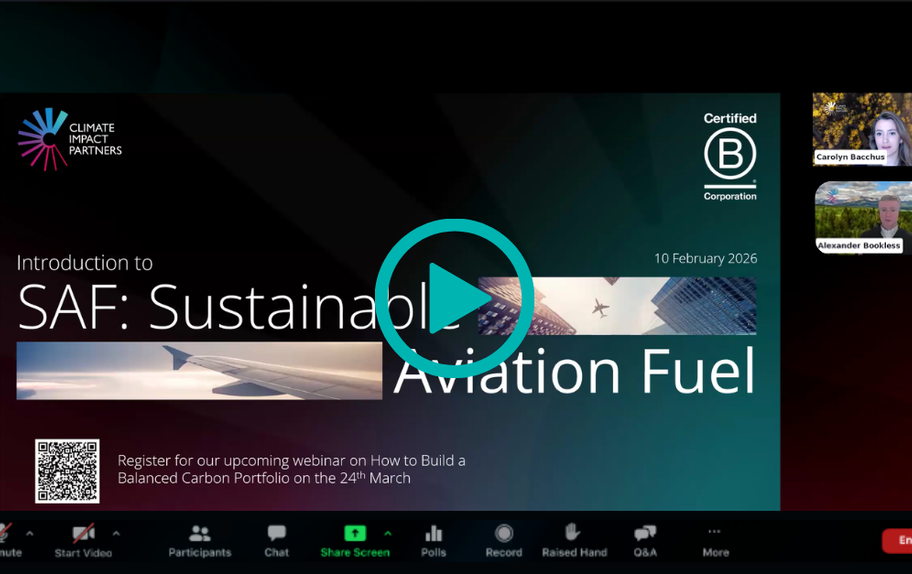
Sustainable aviation fuel (SAF) and SAF Certificates (SAFc) are rapidly moving from niche concepts to essential tools for addressing business-travel emissions in Scope 3. In our recent webinar, led by Carolyn Bacchus, SVP of Client Solutions, Americas, and Alexander Bookless, EAC and SAF Sourcing Director of Climate Impact Partners, we explored the evolving SAF landscape, why demand is accelerating, and what organizations need to know as they integrate SAFc into their climate strategies.

Webinar on-demand: SAF Explained - Addressing Scope 3 Emissions

Watch the full webinar recording to understand what are SAF and SAFc (certificates), how they address Scope 3 emissions, and how to integrate SAFc into your net zero strategy.

Watch Replay Now
SAF Is Central To The Aviation Industry’s Path To Net Zero 

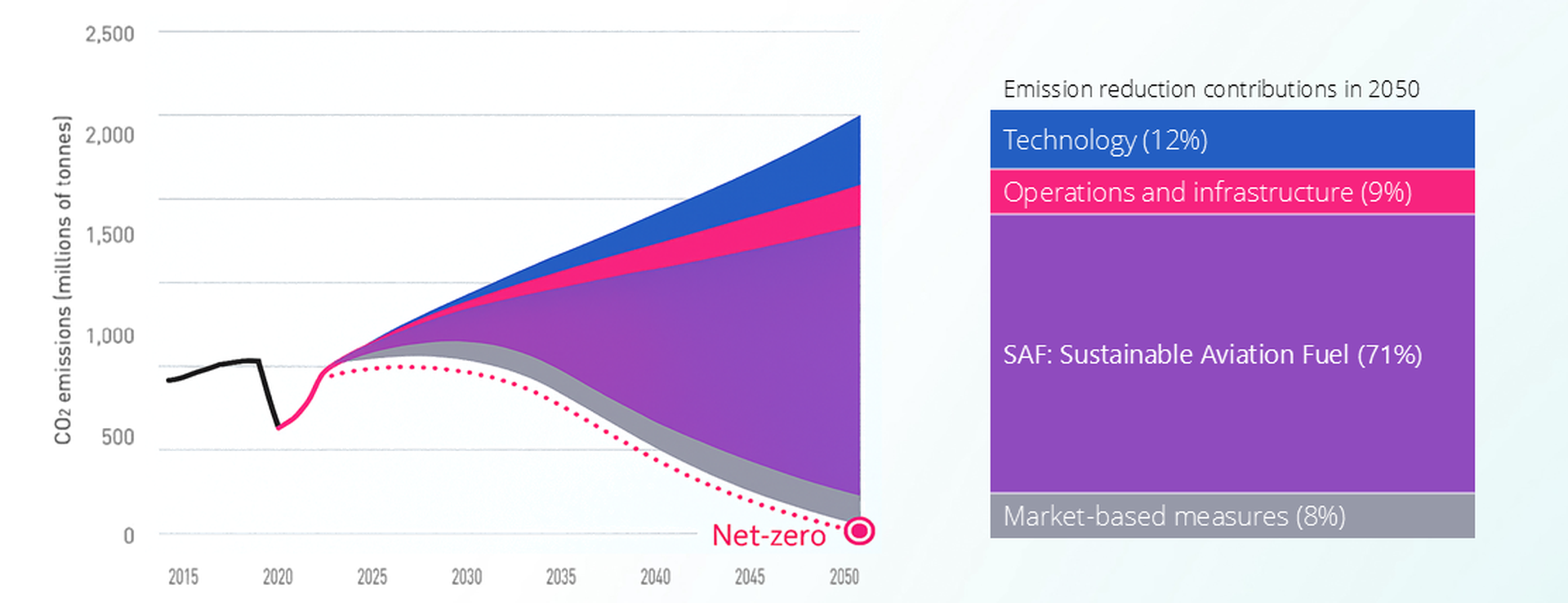
Global air travel is projected to grow through 2050. With operational efficiency improvements only able to deliver a fraction of required emissions reductions, SAF plays a critical role. According to the Waypoint 2050 Report, SAF is expected to provide 31% to 60% of total aviation emissions reductions depending on the scenario. 

Unlike fossil jet fuel, SAF is produced from waste oils, biogenic materials, or emerging synthetic pathways. While it releases CO₂ when burned, its carbon originates from recently absorbed sources, not newly extracted fossil carbon. This fundamental shift drives 70–95% reductions in lifecycle emissions compared to conventional kerosene. 

Why SAF Certificates Matter For Corporate Climate Action 

SAF Certificates (SAFc) enable companies to support verified SAF deployment, even when their business travel doesn’t occur at airports where SAF is available. Through a book‑and‑claim system, corporates can purchase the environmental attributes of SAF produced and used elsewhere, applying the reduction toward their Scope 3 business‑travel emissions. 

Key benefits SAFc include: 

  • Address the hardest-to-abate Scope 3 emissions source for many corporates  with emissions reduction targets. 
  • Differentiate your brand as an early adopter of SAFc. 
  • Accelerate the market growth for SAF immediately. 
  • Contribute to aviation’s long-term sustainability. 

Where Are SAF Certificates In The Mitigation Hierarchy? 

According to leading corporate sustainability frameworks like SBTi, companies should prioritize mitigation activities in the following order: 

  1. Avoid and prevent emissions within the value chain: Companies should first try to prevent emissions from occurring through changes in processes, behavior, or design. Next, they focus on reducing emissions in their operations and supply chains, improving efficiency, and adopting cleaner technologies. 
  2. Substitute with low-carbon alternatives: After reduction, companies should substitute fossil-based inputs or energy with renewable or lower-carbon alternatives like Energy Attribute Certificates (EACs) or SAF to cut emissions further. 
  3. Compensate with high-quality carbon offsets: remaining emissions can be compensated through purchasing credible carbon credits or offsets that reduce emissions. 

Integrity And Transparency Are Non‑Negotiable 

Transparency and quality assurance remain essential as organizations scale their climate strategies and evaluate new market-based tools. The integrity of SAFc largely depends on feedstock choice, which varies widely in climate impact, land-use risk, and credibility - not all SAFc deliver the same climate value. 

Climate Impact Partners only supports SAF projects that use low-risk, non-food, or waste-derived feedstocks that demonstrate clear and measurable GHG benefits.  

Intrinsic to the quality and integrity of SAF certificates that we supply is compliance with the leading quality standards: ISCC (International Sustainability & Carbon Certification) and RSB (Roundtable on Sustainable Biomaterials). These standards ensure: 

  • Full traceability of feedstocks 
  • Verification of GHG reduction performance 
  • Protection against land‑use change impacts 
  • Robust social and environmental safeguards 
  • Clear and auditable retirement of certificates 

Corporate Adoption Is Accelerating, And Engagement Is High 

The audience poll on our recent SAF webinar revealed a dynamic market in transition: 

  • 57% of respondents said they are already measuring business‑travel emissions, establishing readiness for the next steps. This means that many organizations now have the foundations in place to move quickly toward SAFc action. 
  • ~25% of respondents are already using carbon credits or SAFc to address business-travel emissions. Early adopters are positioning themselves ahead of the curve as interest accelerates across travel intensive sectors. 
  • Over 40% of respondents said they expect to use SAFc within the next 12 months, signaling clear momentum. 
  • Others are actively exploring pathways to reduce aviation emissions but seeking guidance on best‑practice approaches. 

Across sectors, early adopters are seeing strategic value in participating now – both to meet climate targets and to demonstrate leadership. 

Planning Ahead Is Essential as Demand Outpaces Supply 

SAF production needs to scale by 300× by 2050, requiring more than a trillion dollars in investment. Voluntary corporate demand plays a pivotal role in catalyzing that growth. 

Planning early and securing SAFc volume now can help you gain a decisive leadership edge as more companies evaluate SAFc as part of their climate strategies. 

Benefits include:  

  • Securing future volumes 
  • Locking in pricing 
  • Signaling internal commitment 
  • Strengthening long‑term net‑zero pathways 

What Comes Next? 

We received a significant number of thoughtful questions during the session on reporting frameworks, accounting methods, feedstock choices, and long‑term procurement strategies. Read our detailed FAQs

In the meantime, Carolyn and Alex encouraged organizations to begin exploring: 

  • Internal readiness for SAFc adoption 
  • How SAFc fits within wider mitigation hierarchies 
  • Multi‑year contracting opportunities 
  • Early engagement with procurement and sustainability teams